
CCTV IP Camera Solutions for Commercial Security: Building Smarter and Safer Business Environments
September 28, 2026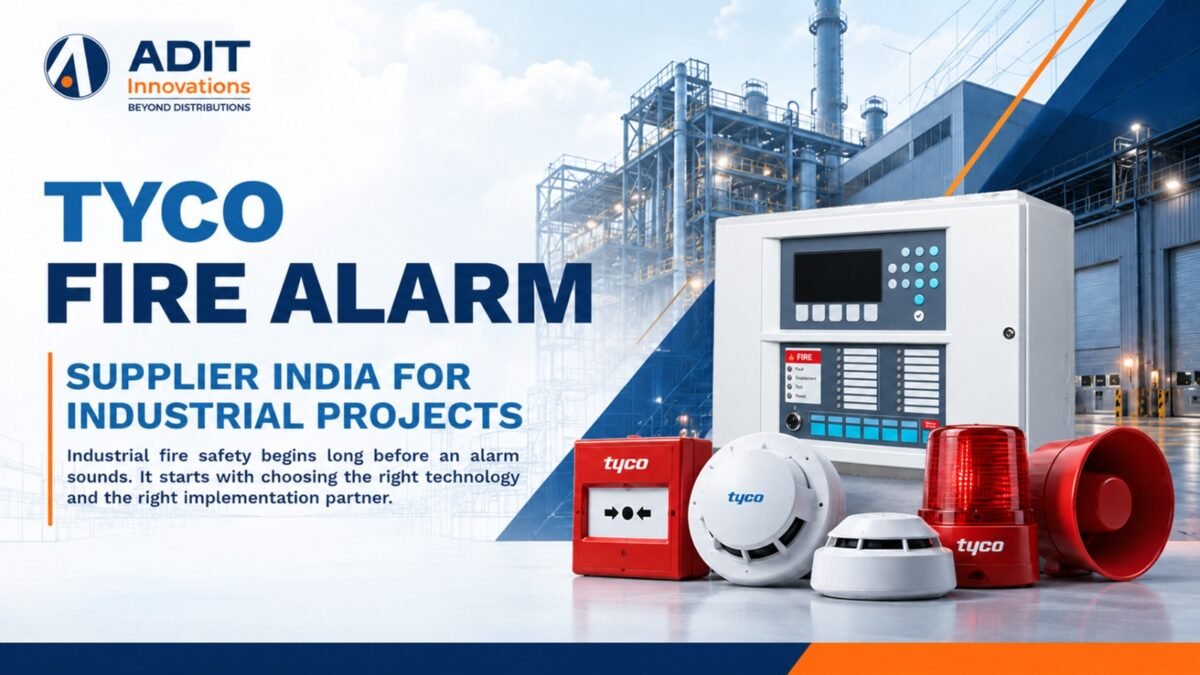
Why Industrial Fire Safety Demands Reliable Solutions
Industrial facilities operate in environments where fire incidents can have serious consequences for people, equipment, production, and business continuity. Manufacturing plants, warehouses, pharmaceutical facilities, logistics centres, data centres, power plants, and other large facilities require dependable fire detection systems designed around their specific risks.
Unlike smaller commercial buildings, industrial projects can involve large open areas, complex production processes, critical infrastructure, hazardous zones, and continuous operations. Early fire detection and accurate alarm identification are therefore important parts of an effective Industrial Fire Alarm System.
Selecting a suitable fire alarm technology is only one part of the process. Working with an experienced TYCO Fire Alarm Supplier India can also help businesses evaluate system architecture, detector selection, integration requirements, and future expansion.
Understanding TYCO Fire Alarm Systems
TYCO® is a Johnson Controls fire protection brand. Its fire protection portfolio includes fire alarm and detection technologies for commercial, industrial, and infrastructure applications.
A TYCO Fire Alarm System is designed to detect fire conditions and communicate information between detectors, control panels, notification devices, and other connected systems.
A typical system may include:
- Fire Alarm Control Panels
- Smoke Detectors
- Heat Detectors
- Beam Detectors
- Flame Detectors
- Duct Detectors
- Manual Call Points
- Sounders and Strobes
- Interface Modules
- Monitoring and Notification Devices
The appropriate combination depends on the building layout, fire risks, environmental conditions, and project requirements.
Conventional vs Addressable Fire Alarm Systems
Fire alarm systems are generally available in conventional and addressable configurations.
A conventional fire alarm system identifies an alarm by zone. This can be suitable for applications where zone based identification meets the project’s requirements.
An addressable fire alarm system assigns an individual address to connected devices. When an alarm occurs, the system can identify the specific detector or device involved.
For many medium and large industrial projects, addressable systems are specified because precise device identification can support faster emergency response, evacuation, and incident management.
The choice between conventional and addressable architecture should be based on the facility’s size, risk profile, operational requirements, and applicable fire safety requirements.
TYCO Fire Alarm Devices for Industrial Applications
Different industrial environments require different types of detection.
Smoke Detectors
Smoke detectors can be used in offices, corridors, control rooms, and other areas where smoke detection is appropriate.
Heat Detectors
Heat detectors can be suitable for environments where smoke, dust, steam, or other conditions could make standard smoke detection unsuitable.
Beam Detectors
Beam detectors can be considered for large open or high ceiling areas where conventional point detectors may not provide the most practical detection arrangement.
Flame Detectors
Flame detectors can be used in areas where rapid flame detection is required, subject to the specific fire risk and environmental conditions.
Duct Detectors
Duct detectors can be used to monitor smoke within air handling systems and support the overall fire detection strategy.
Manual Call Points and Notification Devices
Manual call points allow occupants to initiate an alarm, while sounders and visual notification devices help communicate emergency conditions throughout the facility.
Selecting the appropriate TYCO Fire Protection Products requires consideration of the environment, fire risk, detector characteristics, and overall system design.
Key Features of TYCO Fire Protection Products
1. Intelligent Fire Detection
TYCO systems can use multi criteria or multi sensor detection to evaluate different fire signatures and help distinguish genuine fire conditions from nuisance sources such as dust, steam, or exhaust.
Drift compensation can also help maintain detector performance as environmental conditions change.
These capabilities can help reduce nuisance alarms while supporting early detection and faster emergency response.
2. Scalable System Design
Industrial facilities often expand over time. Fire alarm infrastructure therefore needs to accommodate additional devices, zones, or networked panels where required.
TYCO fire alarm architectures can support scalable configurations. For example, Zettler Profile systems can support approximately 2,000 addresses per panel and up to 99 networked panels, depending on the specific model and configuration.
Actual capacity varies by product, system architecture, and project requirements. System sizing should therefore be confirmed against the technical documentation for the selected model.
3. Suitable Detection for Large Industrial Facilities
Industrial projects can contain different types of spaces, each requiring an appropriate detection strategy.
TYCO solutions can be considered for:
- Manufacturing Plants
- Warehouses
- Logistics Centres
- Pharmaceutical Facilities
- Power Plants
- Data Centres
- Commercial Buildings
Detector selection should be based on factors such as ceiling height, environmental conditions, fire risk, occupancy, and the characteristics of the protected area.
4. Integration with Building Safety Systems
Modern industrial facilities often require fire alarm systems to communicate with other safety and building technologies.
TYCO Fire Alarm Systems can be integrated with:
- Building Management Systems
- Voice Evacuation and EVAC Systems
- Access Control Systems
- Emergency Notification Systems
Integration may use relay contacts, interface modules, or suitable gateways and communication protocols such as BACnet or Modbus, depending on the equipment and project architecture.
For emergency communication, a dedicated Voice Evacuation or EVAC System can provide fire emergency announcements with appropriate priority over normal building communications.
The Fire Alarm Control Panel should remain functionally independent as the primary life safety system. Integration with other building systems should be designed according to applicable requirements, including NBC 2016 Part 4 and IS 2189, along with project specific fire authority requirements and Fire NOC conditions where applicable.
If your project also includes broader security planning, solutions such as Access Control Systems, CCTV IP Camera Solutions, and Video Management Systems can complement the fire protection strategy.
5. Reliable System Monitoring
Continuous system monitoring can help identify:
- Fire alarms
- Device faults
- Communication failures
- Device status
- System abnormalities
This information helps maintenance teams identify issues and take appropriate action to maintain system availability.
Why Industries Choose TYCO Fire Alarm Systems
Industrial projects require fire detection solutions that can accommodate complex environments and operational requirements.
Key considerations when evaluating TYCO Fire Alarm Systems include:
Early Fire Detection
Appropriate detection technologies can help identify fire conditions early and support timely emergency response.
Flexible Deployment
Different detector and system configurations can be selected according to facility size, environmental conditions, and operational requirements.
Long Term Expandability
Scalable architectures can allow additional devices, zones, or networked panels to be incorporated as facilities expand, subject to system capacity.
Intelligent Detection
Multi criteria or multi sensor detection and features such as drift compensation can support reliable detection in changing environmental conditions.
Integration Capability
Fire alarm systems can work alongside other building safety technologies through appropriate interfaces and communication methods.
Compliance Planning
Fire alarm system design should consider applicable standards, project specifications, and local fire authority requirements. In India, relevant references may include NBC 2016 Part 4 and IS 2189, along with applicable Fire NOC requirements.
Choosing the Right TYCO Fire Alarm Supplier in India
Selecting a TYCO Fire Alarm Supplier India involves more than checking product availability.
An experienced supplier should help businesses understand:
- Facility fire risks
- Suitable detection technologies
- Conventional or addressable architecture
- Detector selection
- Panel capacity
- Network requirements
- Integration requirements
- Technical documentation
- Future expansion possibilities
- Applicable fire safety requirements
Pre sales technical consultation can simplify the decision making process and help ensure that the selected system aligns with the project’s operational requirements.
Businesses should evaluate the complete technical support available before implementation rather than focusing only on individual product specifications.
Why Technical Guidance Matters
Every industrial project has different safety requirements. Building layout, occupancy, production processes, environmental conditions, hazardous areas, ceiling heights, and future expansion can all influence fire alarm system design.
Professional technical consultation can help identify suitable TYCO Fire Protection Products, detection technologies, system architecture, and integration requirements before implementation.
At ADIT Innovation, customers receive technical guidance to understand available fire alarm technologies and evaluate solutions according to their project requirements.
As part of the broader electronic security ecosystem, Cybergroup supports integrated security technologies that complement industrial fire safety and overall facility protection.
For organizations planning comprehensive infrastructure, related solutions such as CCTV IP Camera Solutions, Video Management Systems, Access Control Systems, and Public Address or Voice Evacuation Systems can work alongside fire detection technologies to create a coordinated safety environment.
Building Safer Industrial Facilities Starts with Better Planning
Industrial fire safety is not only about responding to an alarm. It begins with selecting suitable detection technologies, designing the system around the facility’s risks, and ensuring that connected systems work together appropriately.
A TYCO Fire Alarm System, supported by proper planning and technical guidance, can form an important part of an industrial fire detection infrastructure.
Businesses evaluating a TYCO Fire Alarm Supplier India should consider technology, system architecture, scalability, integration, applicable standards, and technical support before implementation.
Taking a structured approach helps organizations develop fire safety infrastructure that aligns with their operational environment and long term requirements.
Looking for TYCO Fire Alarm Solutions for Your Industrial Project?
Every industrial facility has unique fire safety requirements. Understanding them before implementation helps ensure the selected system aligns with operational, technical, and applicable compliance requirements.
Explore our Fire Alarm System Solutions to learn more about available fire detection technologies.
Product / Service Page:
https://aditgroup.com/fire-alarm-system/
Need technical guidance for your upcoming industrial project?
Our team is available to help you evaluate the right fire alarm solution for your facility.
Contact Us:
https://aditgroup.com/contact-us/
Frequently Asked Questions
1. What is a TYCO Fire Alarm System?
It is a fire detection solution for commercial and industrial applications.
2. What is the difference between conventional and addressable fire alarms?
Conventional systems identify alarm zones, while addressable systems identify individual devices.
3. Which detectors are used in industrial fire alarm systems?
Depending on the application, systems may use smoke, heat, beam, flame, and duct detectors.
4. Can TYCO systems integrate with other building systems?
Yes. Integration can include access control, BMS, and Voice Evacuation or EVAC systems.
5. Which standards apply to fire alarm systems in India?
Relevant requirements can include NBC 2016 Part 4, IS 2189, and applicable local Fire NOC requirements.