
Top Fire Alarm Brands in India 2026: A Guide to Reliable Fire Detection Solutions
August 4, 2026
Apollo Fire Alarm Features & Benefits: A Complete Guide to Intelligent Fire Detection
September 16, 2026Fire Alarm System Installation Guide for Offices: Everything You Need to Know Before You Begin
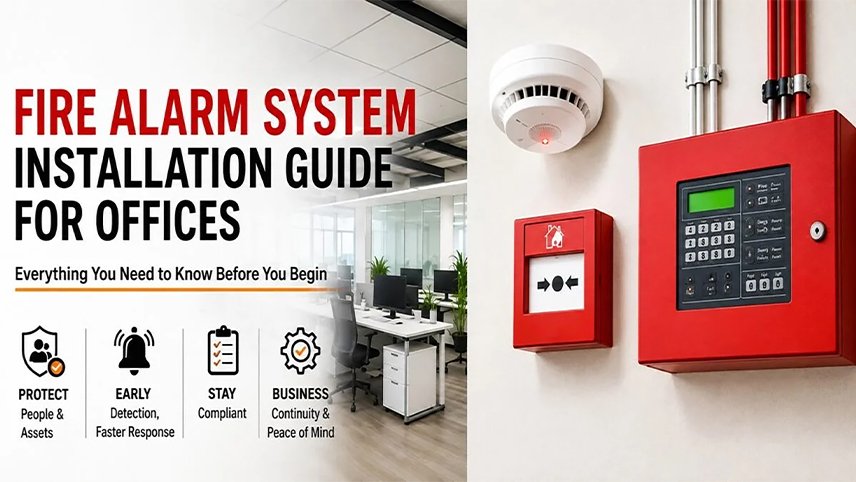
Why Every Office Needs a Fire Alarm System
Every office is responsible for creating a safe environment for employees, visitors, and business assets. While fire incidents are unpredictable, the right fire alarm system can provide early detection, allowing occupants to respond quickly and safely.
Modern offices are equipped with electrical equipment, server rooms, workstations, meeting spaces, and storage areas that increase the importance of reliable fire detection. Installing a fire alarm system is not simply about meeting compliance requirements. It is about protecting people, reducing operational disruptions, and supporting business continuity.
However, the effectiveness of any fire alarm system depends largely on how well it is planned and installed.
Planning Before Fire Alarm System Installation
A successful fire alarm installation begins long before the first detector is mounted.
Before selecting equipment, it is important to understand the office layout, occupancy levels, fire risks, and future expansion plans. A small office with a few cabins has different requirements than a multi floor corporate building.
Some important questions to consider include:
- How many floors need protection?
- Are there server rooms or electrical panels?
- Are there emergency exits on every floor?
- Will the office expand in the future?
- Does the building already have other safety systems?
Answering these questions helps determine the most suitable fire alarm configuration.
Step-by-Step Fire Alarm System Installation Guide
Step 1: Conduct a Site Assessment
Every installation should begin with a detailed survey of the office premises.
The assessment identifies fire risks, escape routes, equipment locations, ceiling heights, and occupancy patterns. This information forms the foundation of an effective fire detection plan.
Step 2: Select the Appropriate Fire Alarm System
Depending on the size and complexity of the office, you may choose between conventional and addressable fire alarm systems.
Addressable systems are generally preferred for medium and large offices because they can identify the exact location of an alarm, helping maintenance teams respond more efficiently.
Step 3: Decide Detector Placement
Proper detector placement is essential for reliable detection.
Smoke detectors are commonly installed in workspaces, corridors, meeting rooms, and reception areas, while heat detectors may be more suitable for kitchens or utility rooms where smoke from normal activities could trigger false alarms.
Detector positioning should ensure complete coverage without unnecessary overlap.
Step 4: Install Control Panels and Notification Devices
The fire alarm control panel acts as the central monitoring unit of the system.
Manual call points, hooters, sounders, and visual notification devices should be positioned where occupants can easily access or notice them during an emergency.
Proper visibility and accessibility improve response time during evacuation.
Step 5: Integrate with Other Building Systems
Many modern offices integrate fire alarm systems with access control, public address systems, elevators, and building management systems.
This integration allows coordinated emergency responses, such as unlocking emergency exits or broadcasting evacuation announcements.
For organizations planning integrated security infrastructure, exploring related solutions like Access Control Systems and Public Address Systems can improve overall workplace safety.
Step 6: Testing and Commissioning
Before the system becomes operational, every detector, sounder, notification device, and communication link should be thoroughly tested.
Commissioning verifies that all components function correctly and comply with applicable standards.
Routine testing should continue even after installation to ensure long term reliability.
Common Fire Alarm System Installation Mistakes
Even high-quality fire alarm equipment can underperform if installation is not properly planned.
Some common mistakes include:
- Installing detectors too close to air conditioning vents
- Choosing incorrect detector types for specific areas
- Ignoring future office expansion
- Poor cable management
- Skipping regular testing after installation
- Not training employees on emergency procedures
Avoiding these mistakes helps improve system performance and workplace safety.
Why Professional Product Guidance Matters
Fire alarm installation is not simply about placing detectors across an office.
It involves understanding building layouts, evacuation paths, occupancy patterns, applicable standards, and system compatibility.
Professional planning helps ensure that every component works together effectively while reducing the possibility of costly modifications later.
At ADIT Innovation, technical consultation supports customers in understanding system requirements before implementation, helping them make informed decisions based on their office environment and operational needs.
As part of the broader electronic security ecosystem, Cybergroup also contributes by enabling organizations with integrated security technologies that complement modern fire safety infrastructure.
Creating a Safer Workplace Starts with the Right Fire Alarm Solution
Installing a fire alarm system is one of the most important investments an organization can make for workplace safety.
Proper planning, appropriate equipment selection, and proper installation all contribute to a reliable fire detection system that supports employee safety and business continuity.
Rather than focusing only on products, organizations should priorities solutions that align with their building layout, operational requirements, and future growth.
Need Guidance for Your Office Fire Alarm System?
Every office has unique safety requirements. Understanding them before installation can help you choose a system that fits your workplace today and supports future expansion.
Explore our Fire Alarm System Solutions to learn more about available technologies and applications.
Product / Service Page: https://aditinnovations.in/fire-alarm-system-supplier/
If you would like technical guidance for your office project, our team is here to assist.
Contact Us: https://aditgroup.com/contact-us/
Frequently Asked Questions
1. Which fire alarm system is suitable for offices?
Addressable systems are generally preferred for medium and large office buildings.
2. How often should office fire alarm systems be tested?
Routine inspections and scheduled testing should be performed as recommended by applicable standards.
3. Where should smoke detectors be installed?
They should cover workspaces, corridors, meeting rooms, and common office areas.
4. Can fire alarm systems integrate with access control?
Yes. Modern systems can integrate with multiple building safety technologies.
5. Why is professional installation important?
It helps ensure proper system design, compliance, reliable performance, and long-term safety.